Air Conditioner Peptide Screening Laboratories Third-party Peptide Analysis
Recognizing Peptide Purity: What 99%+ Truly Indicates
During solid-phase synthesis, each amino acid combining step has a yield of approximately 99-- 99.8%. When a coupling stops working, the expanding chain is capped to stop more elongation of the incorrect sequence. The result is a peptide that's shorter than planned-- missing one or more amino acids.- The top quality and reliability of a peptide pureness measurement depend on method criteria and documents high quality.
- Jobs can range from one sample identification check to multi-lot comparability, recurring review, solubility evaluation, or stability-focused analytical packages.
- Many peptide providers and research labs rely upon numerous well-established logical methods.
- As long as you acquire peptides from a trusted resource that offers a full certificate of evaluation, you can be confident in the peptide's purity grade and usage scope.
- These solvents can impact peptide capability, so precise metrology is essential to ensure purity and avoid contamination in speculative setups.

Services
The buddy page on why 99 percent pureness matters explains why tiny pollutant percentages can still matter in delicate in-vitro assays. Together with this peptide testing overview, those web pages create the trust-methodology layer behind the item magazine. Peptide screening is effective, however scientists must review the scope of each method very carefully.
In straightforward terms, a peptide listed as 95% pure consists primarily of the target peptide (95%), with the continuing to be ~ 5% composed of impurities. These pollutants can consist of things like shortened or abbreviated sequences, deletion versions, oxidized deposits, or various other minor side-products from the synthesis process. Peptides are commonly used in the medical looks, cosmetics, and biomedical fields due to their special biological task and broad application potential. Nevertheless, the quality of peptide products straight impacts their performance and security, making exact quality testing services crucial.Conventional Purity (≥ 95%)
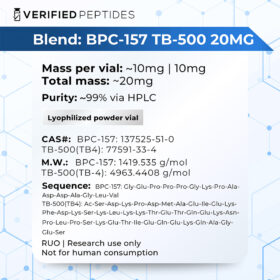
Maintaining a high degree of pureness is essential since pollutants can affect bioassays or reactions. As an example, truncated peptides or chemically customized side-products might bind to targets or generate adverse effects that confuse your outcomes. Particularly changed peptides or cyclic peptide sequences are tough to validate, which impacts quality assurance. We combine LC-MS/MS and chemical digestion evaluation to precisely confirm the series and adjustment sites of non-natural modified peptides. Residual organic solvents, metal ions, or spin-offs from synthesis might trigger harmful adverse effects.
Measuring peptide pureness is commonly done with analytical high-performance fluid chromatography (HPLC), usually combined with mass spectrometry (MS) for identification confirmation. These analytical strategies are common in peptide quality control and you will certainly generally obtain HPLC and MS data with a research peptide order. The main analytical approaches for peptides include liquid chromatography (LC), usually HPLC, combined with mass spectrometry (MS) for exact molecular weight determination and sequence recognition. Desalted peptides work well for ELISA covering, some cell-based assays, and applications where modest purity is acceptable. After synthesis and purification, peptides are normally lyophilized (freeze-dried) as salts. The most usual counterion is trifluoroacetate (TFA) from the HPLC filtration solvents, though some peptides are supplied as acetate or hydrochloride salts. These counterions aren't "contaminations" in the HPLC sense-- they don't appear as different peaks-- but they do add to the overall mass of the powder.